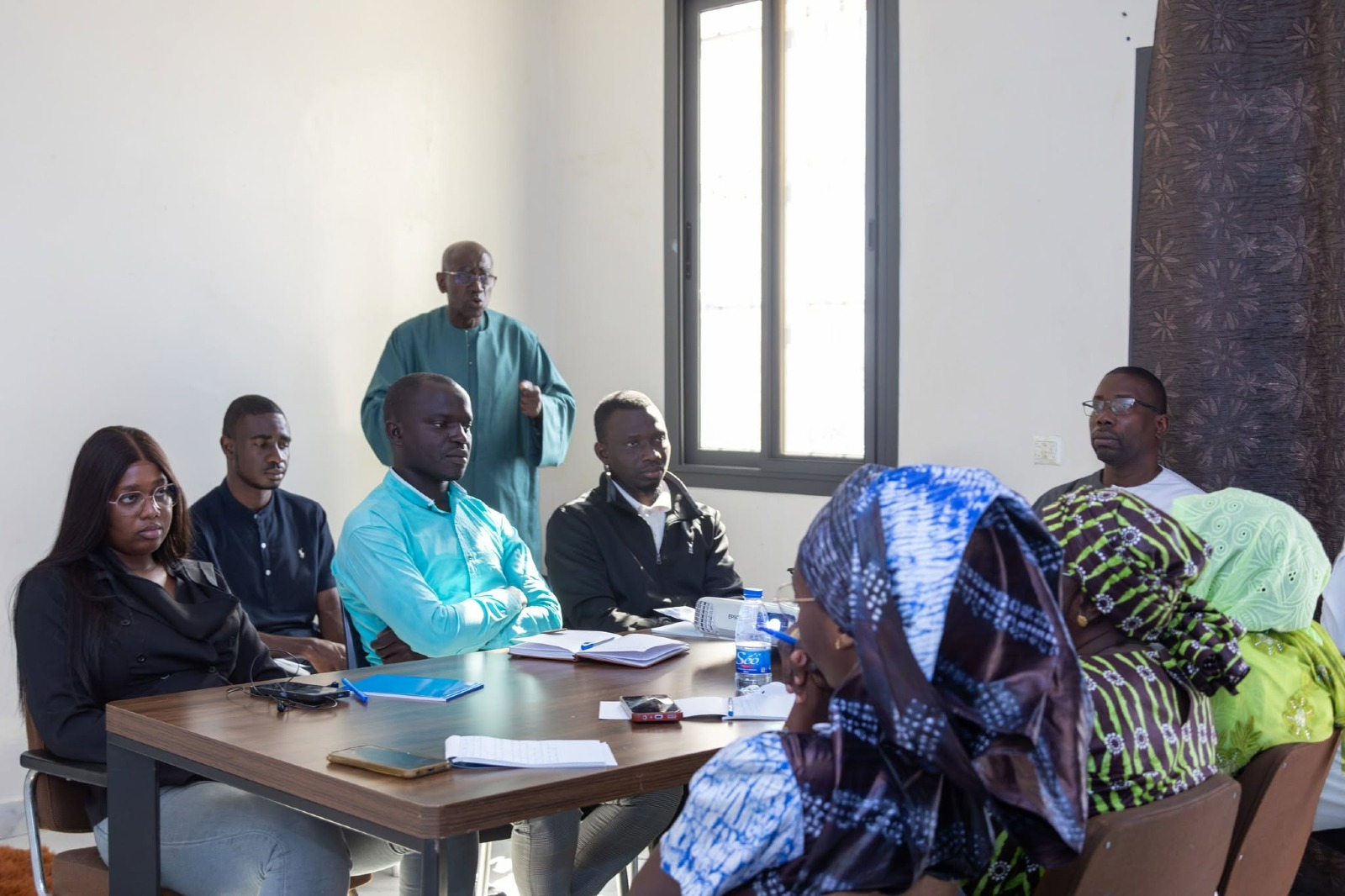
DAKAR, Senegal – March 2026 – Reliable data is essential to assessing development programmes, measuring their impact and informing decisions that improve the lives of communities. Against this backdrop, the Centre for Action for Development and Research (CADRE) has trained field data collection teams deployed across several regions of Senegal as part of the evaluation of ChildFund GinSeng’s Livelihoods Strengthening Programme.
DAKAR, Senegal – March 2026 – Reliable data is essential to assessing development programmes, measuring their impact and informing decisions that improve the lives of communities. Against this backdrop, the Centre for Action for Development and Research (CADRE) has trained field data collection teams deployed across several regions of Senegal as part of the evaluation of ChildFund GinSeng’s Livelihoods Strengthening Programme.
The initiative aims to strengthen the operational capacities of data collectors and ensure that information gathered across the programme's intervention areas meets consistent standards of quality and reliability.
The objective is to generate accurate, comparable and usable data to support evidence-based analysis of programme outcomes and assess the effects of interventions on the living conditions of beneficiary communities.
Data quality: A prerequisite for credible programme evaluation
In development programmes, the reliability of evaluation findings depends largely on the quality of data collected in the field. Incomplete, inconsistent or differently collected information can undermine analysis and limit the ability of implementing partners to determine whether their interventions are achieving meaningful results.
Against this background, CADRE organised a training programme designed to harmonise data collection practices among field teams deployed across several regions of Senegal.
Beyond theoretical instruction, the initiative focused on strengthening participants' understanding of data collection protocols, reducing the risk of errors and ensuring consistent application of methodologies across all programme intervention areas.
Practical training and digital tools at the centre of the approach
Designed around an adult-learning methodology, the training prioritised practical skills that participants could immediately apply in the field.
The programme combined simulations, hands-on exercises and practical instruction in digital data collection tools, particularly KoboCollect.
The application enables field teams to capture and organise information digitally, supporting structured data collection operations. Familiarity with the platform helps standardise procedures and facilitates the availability of data for subsequent processing and analysis.
This practice-oriented approach was intended to prepare participants for fieldwork while strengthening their ability to produce information that meets the programme's quality requirements.
Measuring impact to improve development interventions
The data generated through this exercise is expected to contribute to a stronger assessment of the programme's outcomes in two key areas: food security and the economic resilience of beneficiary populations.
Access to robust and comparable information is essential to understanding changes on the ground, identifying progress and detecting potential gaps in programme implementation.
For programme partners, these findings can also serve as a basis for decision-making. They can help inform adjustments to interventions, improve monitoring and evaluation systems, and strengthen accountability to affected communities and participating institutions.
Reliable data for more effective development programmes
Through this assignment, CADRE is highlighting an important dimension of its work in the development sector: providing technical support for data collection, evidence generation and analysis.
At a time when development organisations are increasingly expected to demonstrate the results and impact of their programmes, information quality has become a critical factor in institutional performance and credibility.
Training field data collection teams is therefore part of a broader effort to transform data into a practical tool for programme management, organisational learning and continuous improvement.
The challenge goes beyond simply gathering information. It is about generating reliable evidence that can inform decisions and contribute to development programmes that are more effective, transparent, accountable and results-oriented.