DAKAR, Senegal – Development organisations, civil society groups and research stakeholders have called for stronger coordination of interventions in the Falémé sub-basin, as communities in the area face growing environmental and socio-economic vulnerabilities.
DAKAR, Senegal – Development organisations, civil society groups and research stakeholders have called for stronger coordination of interventions in the Falémé sub-basin, as communities in the area face growing environmental and socio-economic vulnerabilities.
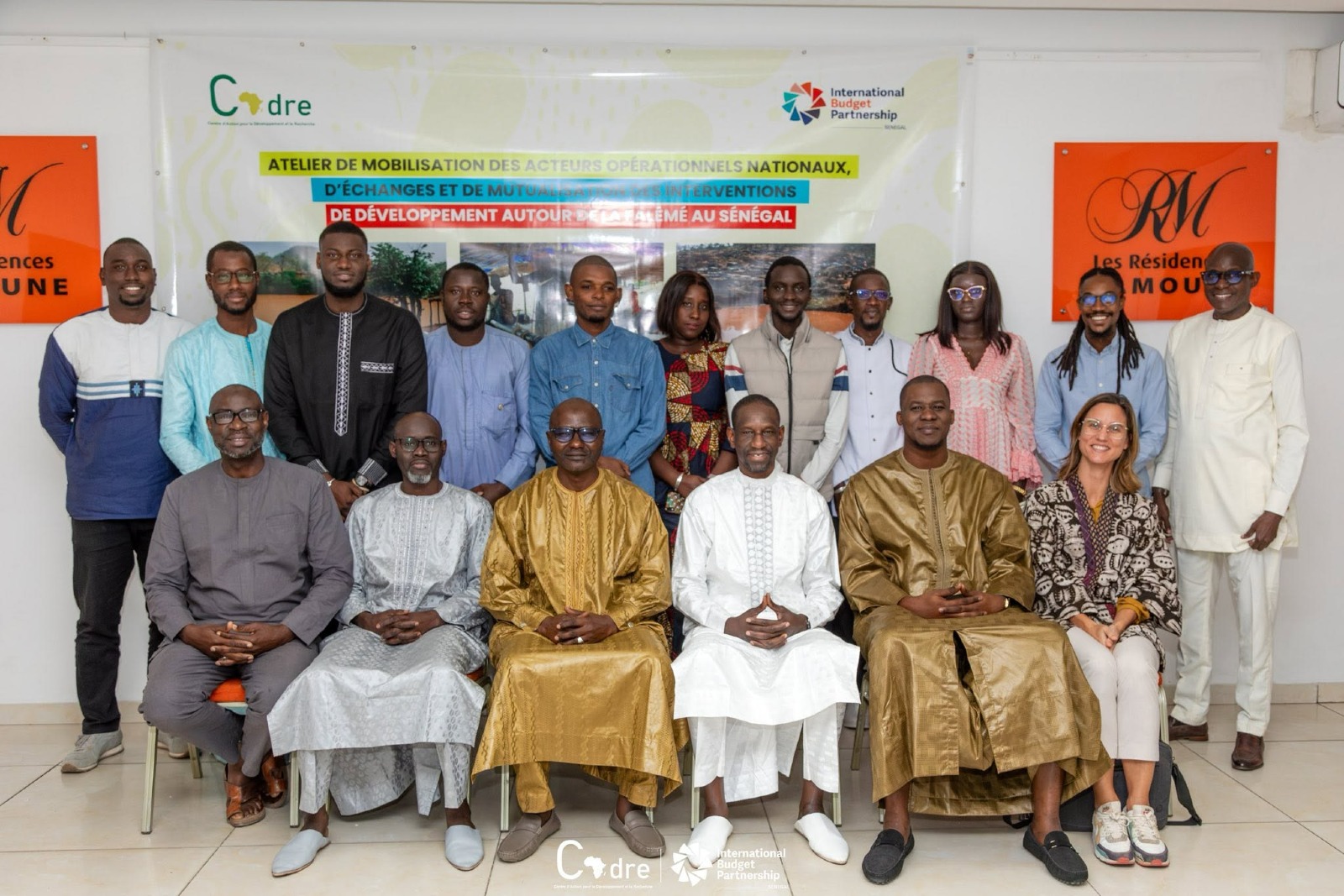
The call emerged from a stakeholder mobilisation and consultation workshop organised in Dakar by the Centre for Action for Development and Research (CADRE), with financial support from International Budget Partnership Senegal. Held at the Résidences Mamoune, the meeting brought together key organisations and institutions working across the Falémé sub-basin.
Held under the auspices of the OMVS/OMVG National Unit, the workshop sought to encourage greater collaboration among operational stakeholders and research institutions, with a view to developing a more coordinated and sustainable response to the challenges facing communities along the Falémé River.
At the heart of the discussions was the need to move beyond isolated development initiatives and establish a shared approach to addressing the impacts of climate change and pressures on natural resources.
A region facing multiple environmental and socio-economic pressures
The Falémé sub-basin faces a range of interconnected environmental, economic and social challenges. Growing pressure on natural resources, the consequences of gold-mining activities and the effects of climate change are among the factors increasing the vulnerability of communities whose livelihoods depend heavily on local ecosystems.
In this context, development organisations, research institutions and public authorities play an important role in supporting affected communities. However, the effectiveness of their interventions also depends on their ability to share information, align strategies and coordinate activities within a common territorial development framework.
This need for stronger coordination was a central focus of the Dakar workshop.
Pooling efforts to increase the impact of development interventions
Participants expressed a strong commitment to improving coordination, complementarity and synergies between the various initiatives implemented across the sub-basin.
The objective is to improve alignment between projects and programmes, make better use of available expertise and avoid fragmented efforts in addressing challenges that extend beyond the capacity of any single organisation.
Bringing operational stakeholders and research institutions together was also identified as a strategic priority. Closer collaboration could help bridge the gap between scientific knowledge and realities on the ground, ensuring that development interventions are better informed by evidence and more responsive to community needs.
Towards a strategic partnership between civil society and OMVS
One of the key outcomes of the meeting was the groundwork laid for a joint roadmap, alongside the identification of initial steps towards a structured partnership between civil society organisations and the Senegal River Basin Development Organisation (OMVS).
The proposed collaboration offers an opportunity to strengthen links between community-based initiatives, development programmes and regional cooperation mechanisms.
For communities living along the Falémé, the ultimate objective is to benefit from better-coordinated interventions that address the environmental, economic and social dimensions of the challenges affecting their livelihoods.
The Dakar meeting therefore marks an important step towards a more collective approach to addressing vulnerabilities across the Falémé sub-basin. The success of this initiative will now depend on the formalisation of the proposed roadmap, clearly defined commitments from participating stakeholders and the effective implementation of agreed actions.
Beyond stakeholder mobilisation, the challenge remains to turn the commitment expressed in Dakar into a lasting and operational partnership that supports local communities and safeguards the natural resources of the Falémé basin.