BAKEL, Senegal – As pollution linked to intensive gold-mining activities continues to threaten the Falémé River, a joint mission by the Centre for Action for Development and Research (CADRE) and International Budget Partnership Senegal brought together local stakeholders from 3 to 7 August 2025 to discuss the environmental, health and security challenges facing communities along the river.
BAKEL, Senegal – As pollution linked to intensive gold-mining activities continues to threaten the Falémé River, a joint mission by the Centre for Action for Development and Research (CADRE) and International Budget Partnership Senegal brought together local stakeholders from 3 to 7 August 2025 to discuss the environmental, health and security challenges facing communities along the river.
The mission covered the municipalities of Sadatou and Gathiary, as well as the prefecture of Bakel, where administrative authorities, local government representatives, civil society organisations and community groups were engaged in discussions on the consequences of pollution affecting the Falémé, a river that forms part of the border between Senegal and Mali.
At the centre of these concerns is the environmental impact of increasingly intensive artisanal gold-mining activities. The use of mercury in gold extraction, the deterioration of aquatic biodiversity and potential health risks to local populations have emerged as major challenges for communities living along the river. Competition over access to natural resources has also contributed to tensions, threatening livelihoods and local economic activities.
Documentary screening brings local stakeholders into the debate
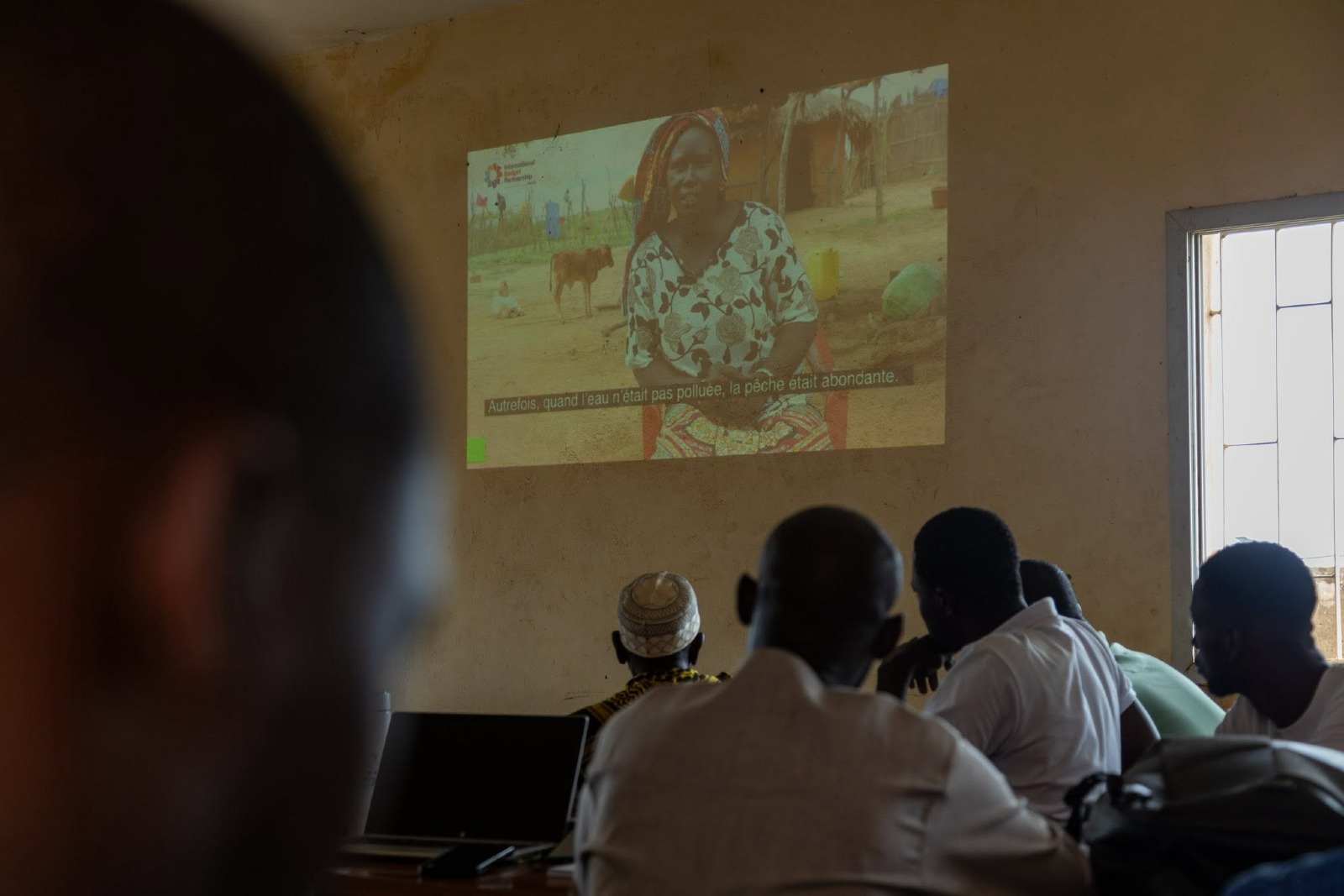
As part of the mission, the CADRE and IBP Senegal teams organised documentary screenings followed by discussions with local stakeholders. The film, produced by Moussa Thiam, provided a platform for examining the situation along the Falémé and encouraging dialogue among the different groups affected.
Participants included administrative authorities, local elected representatives, civil society organisations, women, young people, livestock farmers, fishermen and forestry operators.
The discussions provided an opportunity to share perspectives, assess developments in the response to the Falémé crisis and identify issues requiring coordinated local action.
Beyond raising awareness, the initiative sought to strengthen community participation in discussions and decision-making processes concerning the protection of the river and the management of natural resources.
Territorial consultation framework established to sustain dialogue
One of the key outcomes of the mission was the establishment of a territorial consultation framework, in accordance with Decree No. 2021-1697 of 9 December 2021, which sets out the composition, organisation and operational procedures of territorial consultation frameworks in Senegal.
The mechanism is intended to provide a structured platform for dialogue between local authorities, community representatives and other stakeholders. It could help improve coordination, facilitate information-sharing and encourage collective responses to environmental and socio-economic challenges affecting the area.
Its establishment marks a step towards more sustained local engagement on issues surrounding the Falémé, including the protection of natural resources, the livelihoods of riverine communities and security concerns in this border region.
From dialogue to action: the challenge ahead
While the mission has helped lay the foundations for stronger local engagement, the effectiveness of the newly established framework will ultimately depend on its ability to operate sustainably and translate discussions into concrete action.
Addressing the consequences of pollution along the Falémé requires more than awareness-raising initiatives. It calls for sustained commitment from public authorities, local governments, civil society organisations, community representatives and all stakeholders involved in the exploitation and management of natural resources.
In this context, strengthening local dialogue represents an important step towards developing responses that reflect the realities and needs of communities living along the river.
In Bakel, Sadatou and Gathiary, the joint mission by CADRE and International Budget Partnership Senegal has therefore helped create a space for dialogue around an issue that extends beyond environmental protection, touching on public health, local economies and the security of communities along the Senegal-Mali border.